March 17 in Physics History
Physics history will help you to develop a better understanding of the physics world!
birthdays & deaths
Explore all birthdays & deaths of physicists occurred on this day with their short biography!
physics Events
Know all important discoveries made by physicists & events happened on this day with complete information!
March 17 in Physics History - Births – Physicists born on March 17
No One
March 17 in Physics History - Deaths – Physicists died on March 17
Christian Doppler (29 Nov 1803 - 17 Mar 1853)
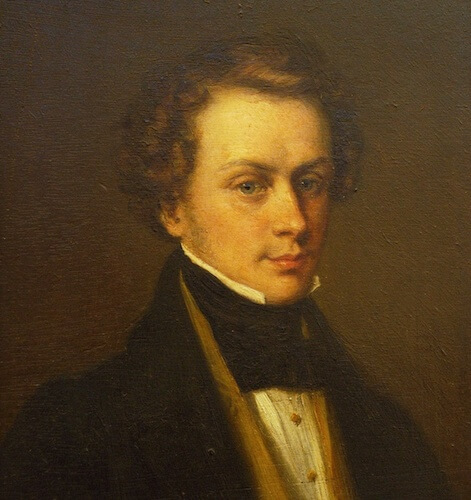
He was an Austrian physicist who first described how the observed frequency of light and sound waves is affected by the relative motion of the source and the detector, known as the Doppler Effect. To test his hypothesis, he used two sets of trumpeters: one set stationary at a train station and one set moving on an open train call, all holding the same note. As the train moved, it was obvious that the frequency of the notes from the two groups didn’t match. Sound waves would have a lower frequency if the source was moving away from the observer and a higher frequency if the source was moving toward the observer. Edwin Hubble used the Doppler effect of light from distant stars to determine that the universe is expanding.
Irène Joliot-Curie (12 Sep 1897 - 17 Mar 1956)
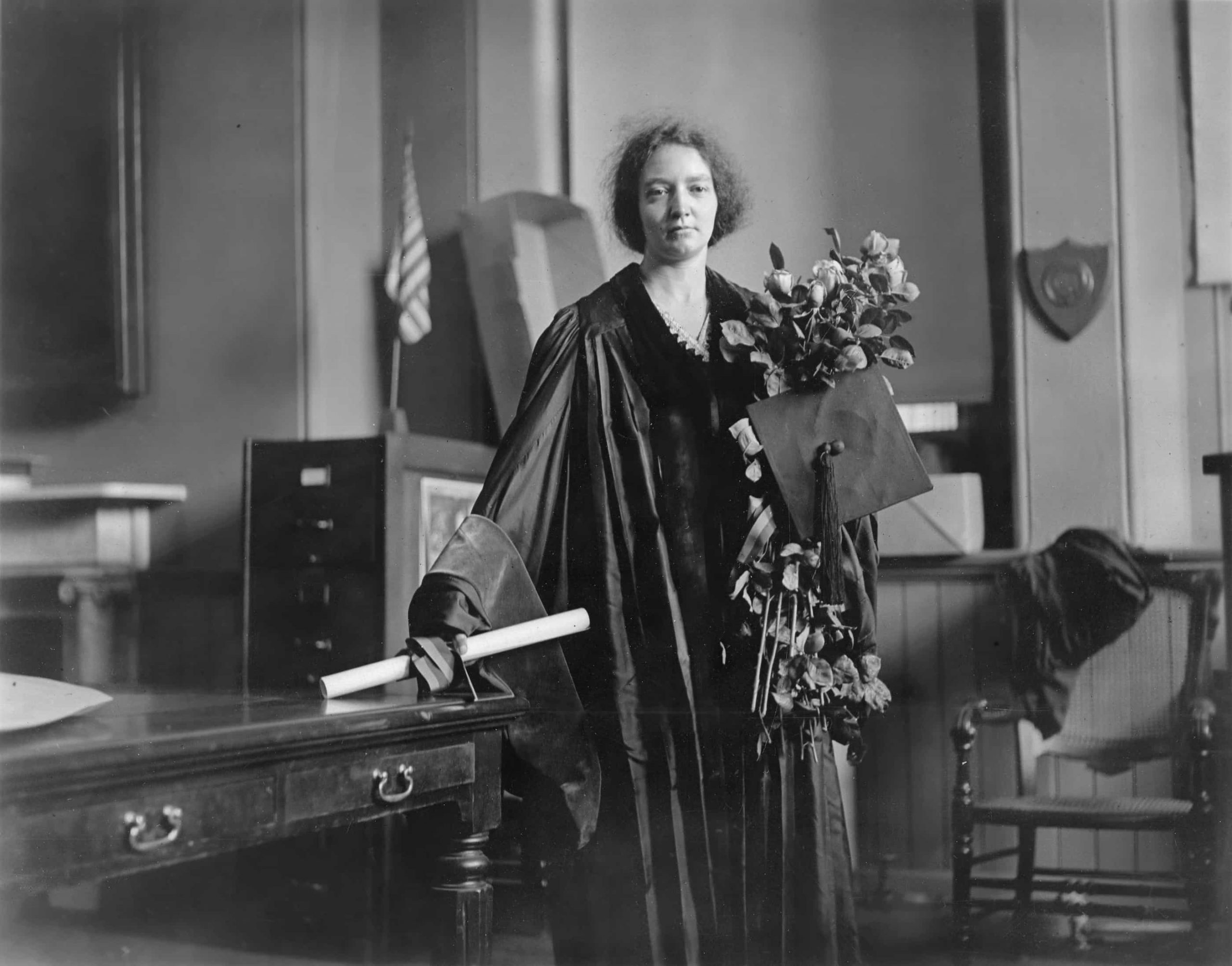
She was a French physicist and physical chemist who shared the Noble Prize for chemistry “in recognition of their synthesis of new radioactive elements” in 1935. In her joint research with her husband Frédéric Joliot-Curie, they discovered that aluminum atoms exposed to alpha rays transmuted to radioactive phosphorus atoms. She was the daughter of Noble prize winners Pierre and Marie Curie. She was the director of the Radium Institute, Paris, founded by her mother. She died of leukemia, like her mother.
Daniel Bernoulli (8 Feb 1700 - 17 Mar 1782)
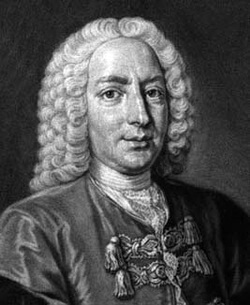
He was a French mathematician who was the most distinguished in the second generation of the Bernoulli family of mathematicians. His talents were broad, including medicine, physiology, mechanics, physics, astronomy, biology, and oceanography. He also derived Bernoulli’s theorem that relates the pressure and velocity of a fluid, in the effect of the application of the conservation of energy. He also won several prizes on diverse subjects, including the tides, optimal shape of hourglasses, and reducing pitch. He established mathematical physics.
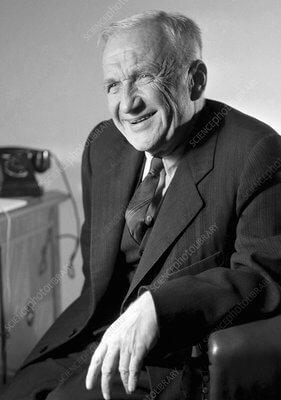
Friedrich Wilhelm Bessel (22 Jul 1784 - 17 Mar 1846)
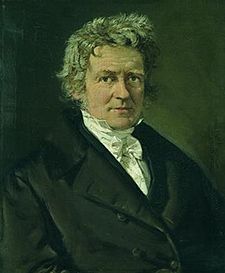
He was a German physicist who spent his entire career from the age of 26 as director of Frederick William III of Prussia’s new Königsberg Observatory and professor of astronomy. His task was determining the positions and proper motions for about 50,000 stars, which allowed the first accurate determination of interstellar distances. His work in determining the constants of nutation, aberration, and precession won him further honors. He was the first to measure the distance of a star by parallax.
George Parker (1697 - 17 Mar 1764)
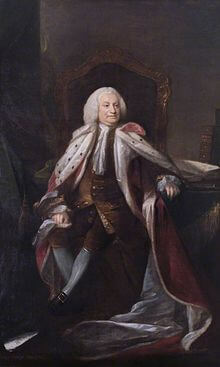
He was an English astronomer who was instrumental in changing the computation of current chronology, subsequently enacted as the British Calender Act of 1751. The new calendar of Pope Gregory XIII had been used in most of Europe since 1582. The new calendar was rejected in England. The old calendar became 11 days out of sequence by 1750 due to a lack of leap years. He was assisted in these calculations by his friend James Bradley, the astronomer royal.
March 17 in Physics History - Events – Physics Events on March 17
Discovery of Phoebe (Moon of Saturn)
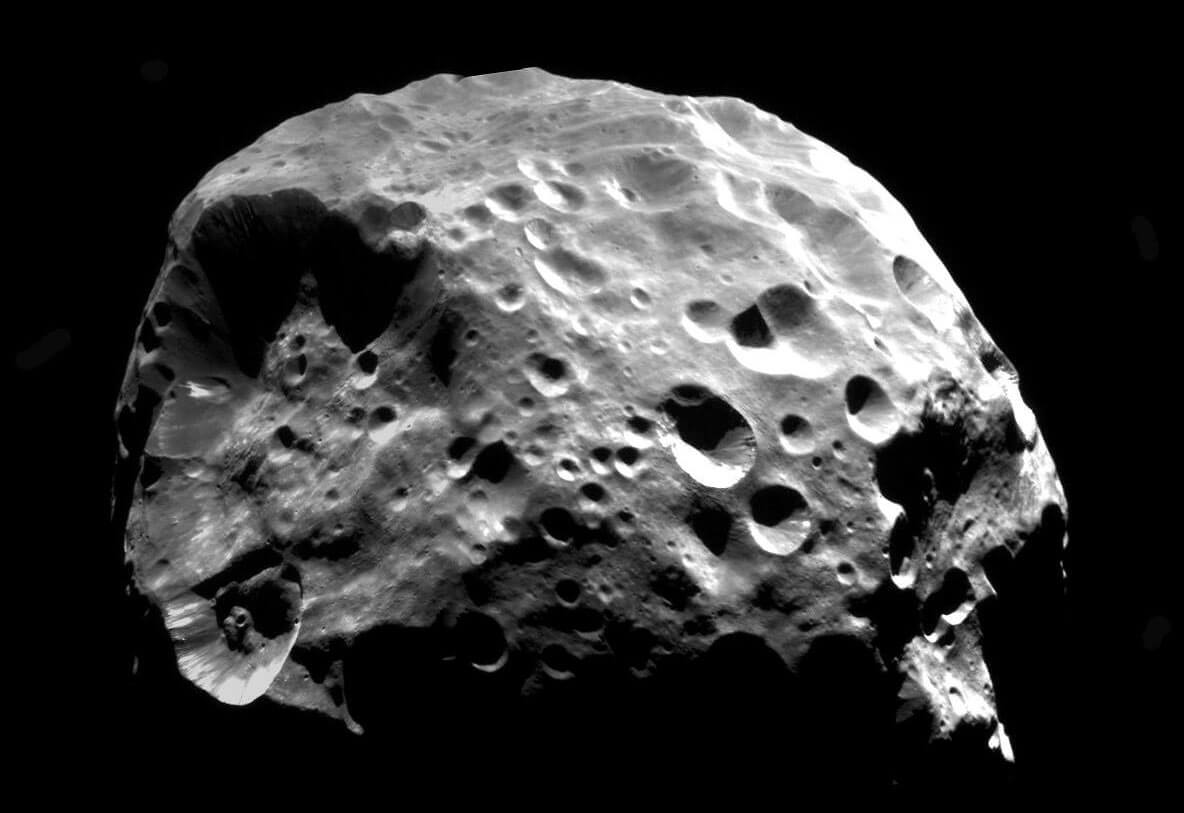
The ninth moon of Saturn, Phoebe was observed by William Henry Pickering as a very faint object on a photographic plate taken on 13 Aug 1898. The image was captured on a plate 14 x 17 inches exposed for two hours in the Bruce photographic telescope at the Harvard station near Arequipa, Peru.
The First US Solar-Powered Satellite
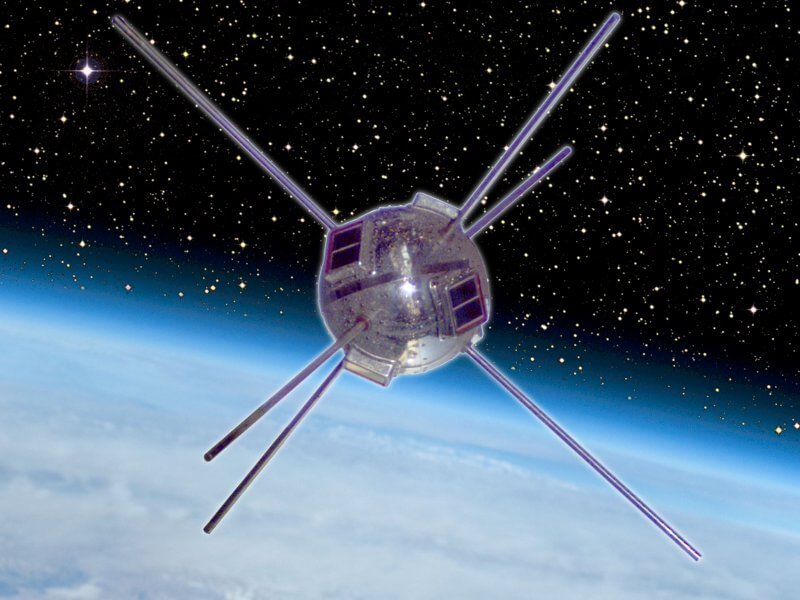
The US launched the Vanguard I satellite in 1958, from Cape Canaveral, Florida. The 3-lb satellite was the first to be solar-powered, carried a radio transmitter, and orbited every 107.9 minutes. It was launched during the international geophysical year and remains the oldest satellite still in orbit. For Vanguard I, the US in only 2 years, 6 months, and 8 days had developed from scratch a complete high-performance three-stage launching, an adequate launching facility, and range instrumentation.
Discovery of Californium
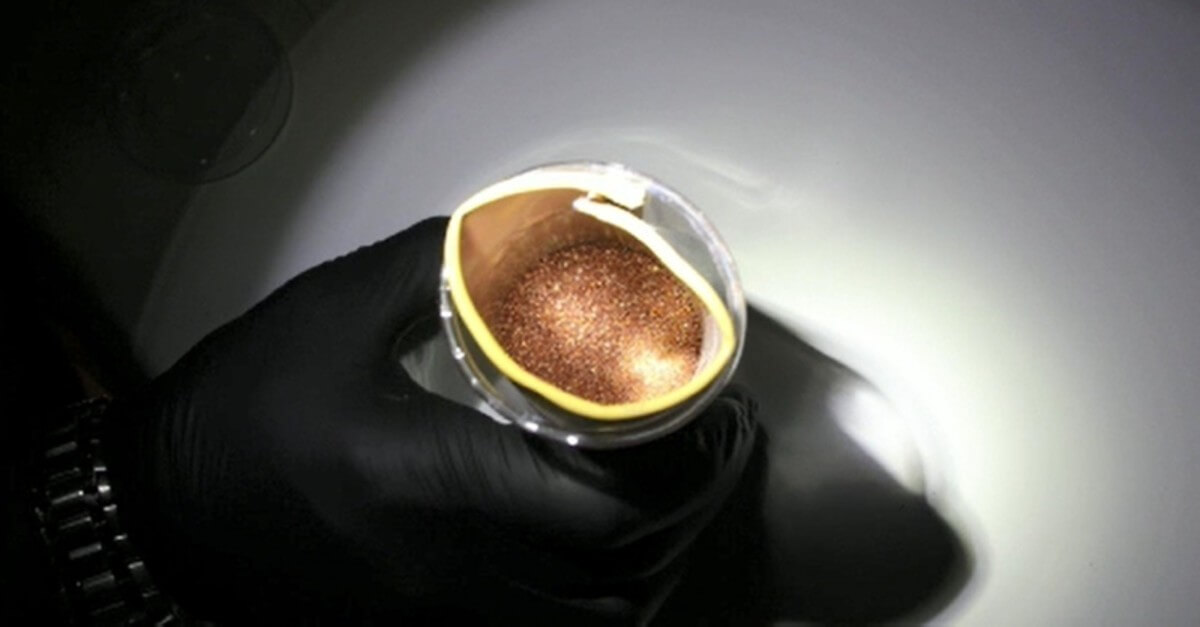
A new element, element 98, named “californium” was announced by scientists at the University of California at Berkeley in 1950. The scientists Kenneth Street, Albert Ghiorso, and Glenn T. Seaborg produced it by bombarding curium-242 with helium-ions in the 60-inch cyclotron. Since then, longer-lived isotopes have been created, including Californium-251 with an 800-year half-life. Californium-252 is used as a neutron emitter and to analyze the sulfur content of petroleum and to measure the moisture content of the soil.