Skip to content Skip to footer

March 18 in Physics History

Physics history will help you to develop a better understanding of the physics world!

birthdays & deaths

Explore all birthdays & deaths of physicists occurred on this day with their short biography!

physics Events

Know all important discoveries made by physicists & events happened on this day with complete information!

March 18 in Physics History - Births – Physicists born on March 18

Rudolf Diesel (18 Mar 1858 - 29 Sep 1913)
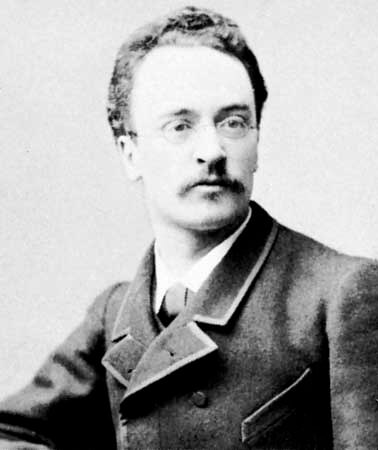
He was a German engineer who invented the internal combustion engine. He studied the four-stroke internal combustion engines developed by Nikolaus Otto, he tried to build an engine that would approach the thermodynamic limit established by Sadi Carnot in 1824. It stated that “if the fuel in a cylinder could be expanded at constant pressure, it could get to Carnot’s limit.” He patented the concept but because of having lost control of his invention and receiving a lot of criticism for his theories, he committed suicide. After boarding an English Channel steamer, he was found dead in the sea.

March 18 in Physics History - Deaths – Physicists died on March 18

Charles Joseph Van Depoele (27 Apr 1846 - 18 Mar 1892)

He was a Belgian-American with more than 100 patents on electrical inventions. As a pioneer in electric lightning, he established the practicality of railway cars running on electricity. He invented an electric generator and also exhibited an operating electric streetcar at the Chicago Exposition of Railway Appliances. He sold his patent to Thomson-Houston Electric Company and died four years later. He also designed electric streetcar systems for several cities.

Harold Jeffreys (22 Apr 1891 - 18 Mar 1989)
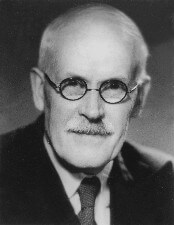
He was an English astronomer, mathematician, and geophysicist. He proposed models for the structures of the outer planets, and also studied the solar system. When he analyzed the earthquake waves, he found that the core of the Earth is molten fluid. He also contributed to the general theory of plant ecology, dynamics, aerodynamics, and relativity theory.

March 18 in Physics History - Events – Physics Events on March 18

The First Spacewalk
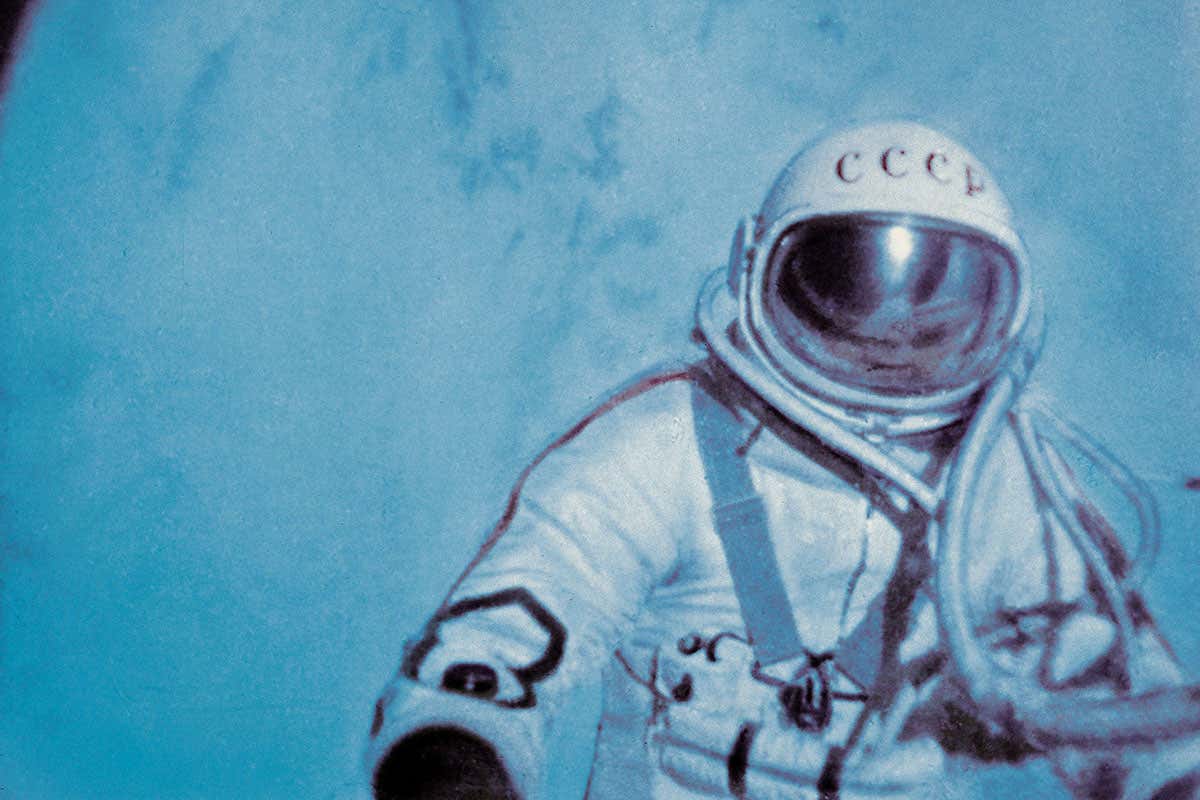
In 1965, Alexei Leonov and Pavel Belyayev became the first to climb out of a spacecraft in space. Voskhod 2 was launched carrying them and on their second orbit, Leonov left the spacecraft through the airlock while still tethered to the vessel. He took motion pictures and moved outside for about 10 minutes.

Woodstock of Physics
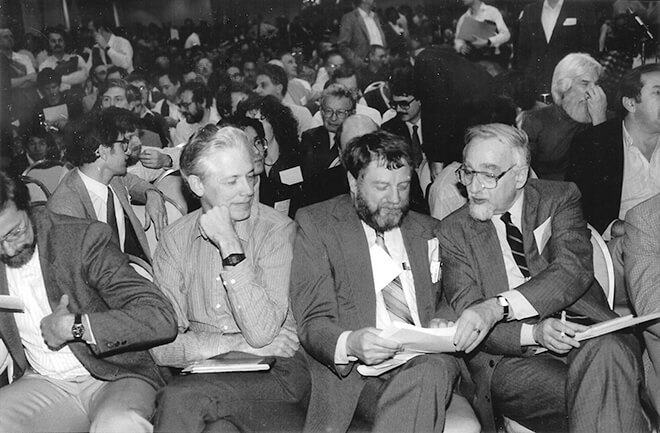
The American Physical Society meeting in New York City was packed with more than 1800 scientists. It was about the latest discoveries in 1987 in “high-temperature” superconductivity (HTS) that were reported by many speakers at the marathon session. It had to be dubbed the “Woodstock of Physics” because of the excitement created. The phenomenon was first reported in 1911 and had occurred at 4 degrees above absolute zero(4K). Dr. Paul Chu, announced HTS achieved at 92 K. Researchers published their discovery of HTS in a ceramic material at 30K range.

April 12 in Physics History

Physics history will help you to develop a better understanding of the physics world!

birthdays & deaths

Explore all birthdays & deaths of physicists occurred on this day with their short biography!

physics Events

Know all important discoveries made by physicists & events happened on this day with complete information!

April 12 in Physics History - Births – Physicists born on April 12

Edward Walter Maunder (12 Apr 1851 - 21 Mar 1928)

He was an English astronomer who first started the British Civil Services Commission examination for the post of photographic and spectroscopic assistant at the Royal Observatory, Greenwich. He worked at the observatory for the next forty years measuring the sunspots and checking historic records. He found a lack of reports on sunspots from 1645 to 1715. Instead of questioning this, he started researching and found that there are indeed decades-long times when the sun has very few sunspots. Now we call these periods as Maunder minima.

Ferdinand von Lindemann (12 Apr 1852 - 6 Mar 1939)

He was a German mathematician who proved that π is not a solution to any algebraic equation with a rational coefficient. This explained the insoluble natural or classical Greek mathematical problem of constructing a square with the same area as a given circle using a ruler and compasses alone. He discussed Hermite’s methods that he used to prove that ‘e’ is transcendental. He extended Hermite’s results in 1882 to show that π was also transcendental.

April 12 in Physics History - Deaths – Physicists died on April 12

Charles Messier (26 Jun 1730 - 12 Apr 1817)

He was a French astronomer who first compiled a systematic catalog of “M objects” and discovered 15 comets. His catalog contained nebulae, 103-star clusters, and galaxies. He concluded the alphanumeric names for objects like M1, M2, etc.

Geoffrey F. Chew (5 Jun 1924 - 12 Apr 2019)

He was an American physicist who led the group of S-matrix theorists researching the strong interaction and the bootstrap principle. He was a graduate student of Enrico Fermi. His group calculated the interactions of bound-states without assuming that there is a point-particle field theory underneath.

Igor Tamm (8 Jul 1895 - 12 Apr 1971)

He was a Soviet physicist who shared the Noble Prize with Pavel A  Cherenkov, and Ilya M. Frank for physics for his works in explaining Cherenkov radiation. He developed the theoretical interpretation of the Cherenkov effect which states that the radiation of electrons moves faster than the speed of light through matter. He also developed a method for studying the interaction of nuclear particles and contributed towards the methods for the control of thermonuclear reactions.

April 12 in Physics History - Events – Physics Events of April 12

First Man To Orbit The Earth

On this day, Yuri Gagarin became the first man to orbit the Earth in 1961. The control of the spacecraft was locked to prevent him from taking control of the ship. It had a radio, television, and life-supporting equipment. He ejected and made a planned descent landing with his parachute but the Soviet Union denied this to save its reputation. After 7 years, he died in a plane crash.

The First Yo-Yo Toy In Space

The first yo-yo toy was taken into space in the Space Shuttle Discovery mission 51-D in 1985. With this yellow plastic Duncan Imperial yo-yo, other toys were exhibited during a time in orbit. Astronauts did the tricks with toys but the yo-yo sleeper trick couldn’t work without normal gravity. While spinning, the gyroscope showed exceptional stability. The flywheel slowed without normal gravity.

Space Shuttle Columbia Was Launched

Columbia, the American Space Shuttle was launched into space in 1981. John W. Young was the mission commander.