Skip to content Skip to footer

March 13 in Physics History

Physics history will help you to develop a better understanding of the physics world!

birthdays & deaths

Explore all birthdays & deaths of physicists occurred on this day with their short biography!

physics Events

Know all important discoveries made by physicists & events happened on this day with complete information!

March 13 in Physics History - Births – Physicists born on March 13

Percival Lowell (13 Mar 1855 - 12 Nov 1916)

He was an American astronomer who initiated the search and predicted the existence of the planet Pluto. He was also passionately committed to finding proof of intelligent life on Mars. He drew the network of several hundred fine straight lines and their intersection in a number of oases while studying Mars. He also believed that water from the melting polar caps flowed down the canals towards the equatorial region to revive vegetation.

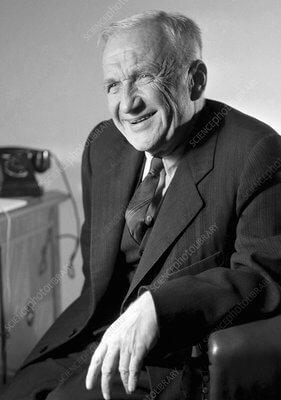
John H. Van Vleck (13 Mar 1899 - 27 Oct 1980)

He was an American physicist and mathematician who gave the modern quantum mechanical theory of magnetism and shared Noble Prize in physics for his work on the behavior of electrons in magnetic, non-crystalline solid materials. He introduced the contribution of the second-order Zeeman effect into the theory of the paramagnetic susceptibility for the ions of elements samarium and europium.
He also studied the theory of the nature of the chemical bond, especially as related to its magnetic properties, and contributed to the theory of the spectra of free molecules.

Dayton Clarence Miller (13 Mar 1866 - 22 Feb 1941)
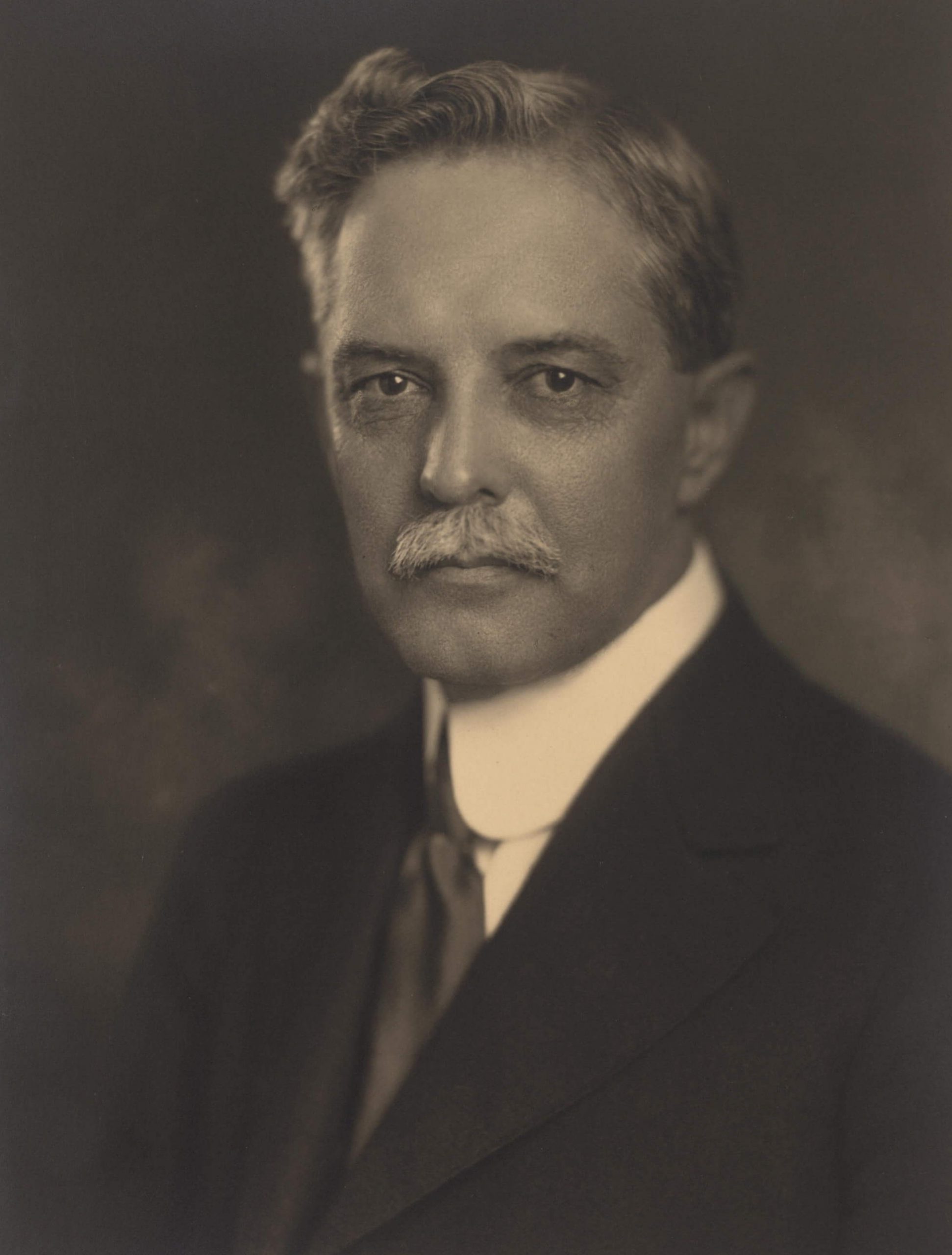
He was an American physicist and author of The Silence of Musical Sounds in 1916.
His collection of nearly 1650 flutes and other instruments is now at the Library of Congress. He invented the phonodeik to provide a mechanical means of recording sound waves photographically.
During WW I, he was consulted concerning using his photodeik to help locate enemy guns. He spent considerable time on repeating the Michelson and Morley experiment to detect aether.

March 13 in Physics History - Deaths – Physicists died on March 13

Robert Innes (10 Nov 1861- 13 Mar 1933)
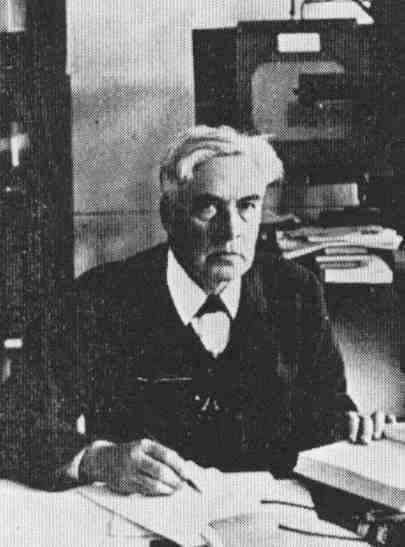
He was a Scottish astronomer known for the discovery of the closest star to earth after the Sun, Proxima Centauri. He became a successful binary star observer with the 7-inch refractor. He was also the first to spot the Daylight Comet in 1910 but this comet was founded independently by so many people that no single original discoverer could be named.

March 13 in Physics History - Events – Physics Events on March 13

Discovery of Pluto

The discovery of the ninth planet Pluto was announced in 1930 by Clyde W. Tombaugh at the Lowell observatory. It was four thousand million miles away and only one-tenth as large as Earth. Pluto was declared a dwarf planet in 2006. It has a heart shape on its surface.

Uranus Planet Discovered

William Herschel detected Uranus in the night sky in 1781 but he thought it was a comet. It was the first planet to be discovered with the help of a telescope. He had also observed the Iranian satellites Titania and Oberon by 1787.

April 12 in Physics History

Physics history will help you to develop a better understanding of the physics world!

birthdays & deaths

Explore all birthdays & deaths of physicists occurred on this day with their short biography!

physics Events

Know all important discoveries made by physicists & events happened on this day with complete information!

April 12 in Physics History - Births – Physicists born on April 12

Edward Walter Maunder (12 Apr 1851 - 21 Mar 1928)

He was an English astronomer who first started the British Civil Services Commission examination for the post of photographic and spectroscopic assistant at the Royal Observatory, Greenwich. He worked at the observatory for the next forty years measuring the sunspots and checking historic records. He found a lack of reports on sunspots from 1645 to 1715. Instead of questioning this, he started researching and found that there are indeed decades-long times when the sun has very few sunspots. Now we call these periods as Maunder minima.

Ferdinand von Lindemann (12 Apr 1852 - 6 Mar 1939)

He was a German mathematician who proved that π is not a solution to any algebraic equation with a rational coefficient. This explained the insoluble natural or classical Greek mathematical problem of constructing a square with the same area as a given circle using a ruler and compasses alone. He discussed Hermite’s methods that he used to prove that ‘e’ is transcendental. He extended Hermite’s results in 1882 to show that π was also transcendental.

April 12 in Physics History - Deaths – Physicists died on April 12

Charles Messier (26 Jun 1730 - 12 Apr 1817)

He was a French astronomer who first compiled a systematic catalog of “M objects” and discovered 15 comets. His catalog contained nebulae, 103-star clusters, and galaxies. He concluded the alphanumeric names for objects like M1, M2, etc.

Geoffrey F. Chew (5 Jun 1924 - 12 Apr 2019)

He was an American physicist who led the group of S-matrix theorists researching the strong interaction and the bootstrap principle. He was a graduate student of Enrico Fermi. His group calculated the interactions of bound-states without assuming that there is a point-particle field theory underneath.

Igor Tamm (8 Jul 1895 - 12 Apr 1971)

He was a Soviet physicist who shared the Noble Prize with Pavel A  Cherenkov, and Ilya M. Frank for physics for his works in explaining Cherenkov radiation. He developed the theoretical interpretation of the Cherenkov effect which states that the radiation of electrons moves faster than the speed of light through matter. He also developed a method for studying the interaction of nuclear particles and contributed towards the methods for the control of thermonuclear reactions.

April 12 in Physics History - Events – Physics Events of April 12

First Man To Orbit The Earth

On this day, Yuri Gagarin became the first man to orbit the Earth in 1961. The control of the spacecraft was locked to prevent him from taking control of the ship. It had a radio, television, and life-supporting equipment. He ejected and made a planned descent landing with his parachute but the Soviet Union denied this to save its reputation. After 7 years, he died in a plane crash.

The First Yo-Yo Toy In Space

The first yo-yo toy was taken into space in the Space Shuttle Discovery mission 51-D in 1985. With this yellow plastic Duncan Imperial yo-yo, other toys were exhibited during a time in orbit. Astronauts did the tricks with toys but the yo-yo sleeper trick couldn’t work without normal gravity. While spinning, the gyroscope showed exceptional stability. The flywheel slowed without normal gravity.

Space Shuttle Columbia Was Launched

Columbia, the American Space Shuttle was launched into space in 1981. John W. Young was the mission commander.