March 14 in Physics History
Physics history will help you to develop a better understanding of the physics world!
birthdays & deaths
Explore all birthdays & deaths of physicists occurred on this day with their short biography!
physics Events
Know all important discoveries made by physicists & events happened on this day with complete information!
March 14 in Physics History - Births – Physicists born on March 14
Albert Einstein (14 Mar 1879 - 18 Apr 1955)

He was a German-American physicist who developed the social and general theories of relativity and won the Noble prize for physics for his explanation of the photoelectric effect in 1921. Einstein advanced a series of theories that proposed entirely new ways of thinking about space, time, and gravitation. His theory of relativity and gravitation revolutionized scientific and philosophic inquiry. Einstein died in April 1955 from an abdominal aortic aneurysm. He has requested that his body be cremated but in a bizarre incident, pathologist Thomas Harvey removed his brain during his autopsy and kept it to study and unlock the secret of his genius. After Einstein’s son’s approval, he cut his brains into pieces, and a handful of studies have been conducted on it since the 1980s.
Eugene Andrew Cernan (14 Mar 1934 - 16 Jan 2017)
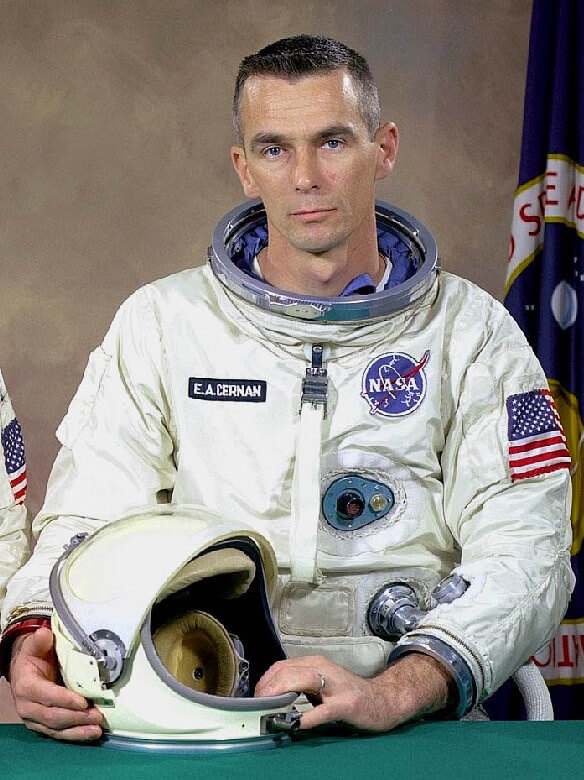
He was an American astronaut who traveled into space three times. He was the second American to make a tethered extravehicular activity when he left his spacecraft for more than 2 hours during Gemini 9 mission. He piloted the lunar module to within 10 miles of the lunar surface as a member of the Apollo 10 flight. He was the last of 13 humans to walk on the moon.
Robert Serber (14 Mar 1909 - 1 Jun 1997)

He was an American physicist who gave lectures on the design and construction of atomic bombs as the construction of atomic bombs as background for the Manhattan Project. He coined the code-names of the three bomb designs: “Little Boy”(uranium gun), “Thin Man”(plutonium gun), “Fat Man”(plutonium implosion). He was part of the first American team visiting to assess their damage at Hiroshima and Nagasaki. He returned to academia after WW II and became a physics professor at Columbia University.
Frank Borman (Born On 14 Mar 1928)
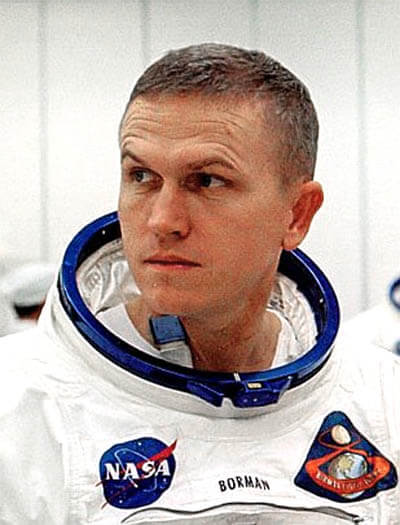
Pieter van Musschenbroek (14 Mar 1692 - 19 Sep 1761)
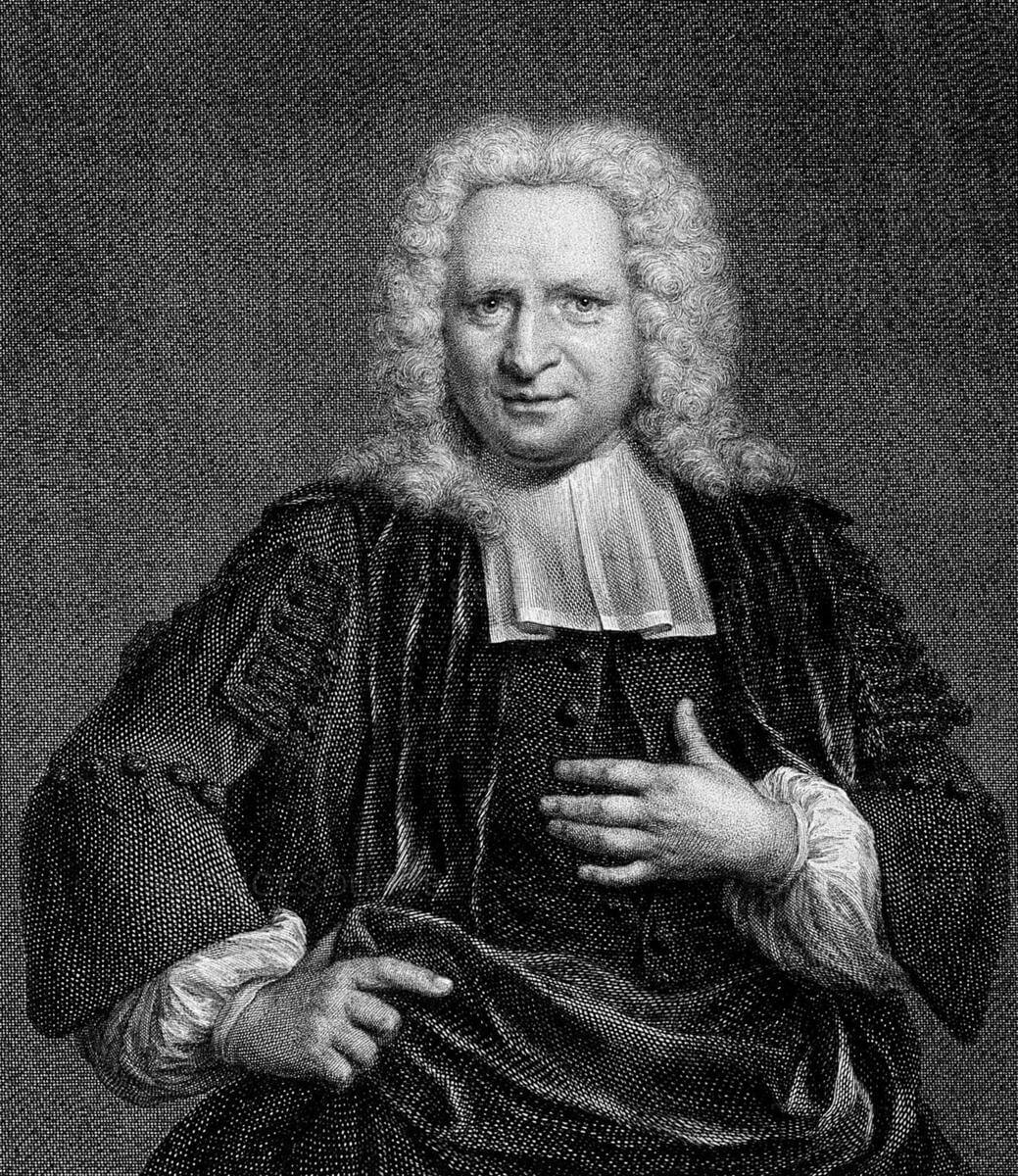
He was a Dutch mathematician and physicist who invented the first device for storing static electricity. His family manufactured scientific instruments such as microscopes, telescopes, and air pumps. In 1746, he placed water in a metal container suspended on silk cords and led a brass wire through a cork into water. He built up a charge into the water. The Leyden name is linked to the discovery having being made at the University of Leiden.
Giovanni Virginio Schiaparelli (14 Mar 1835 - 4 Jul 1910)
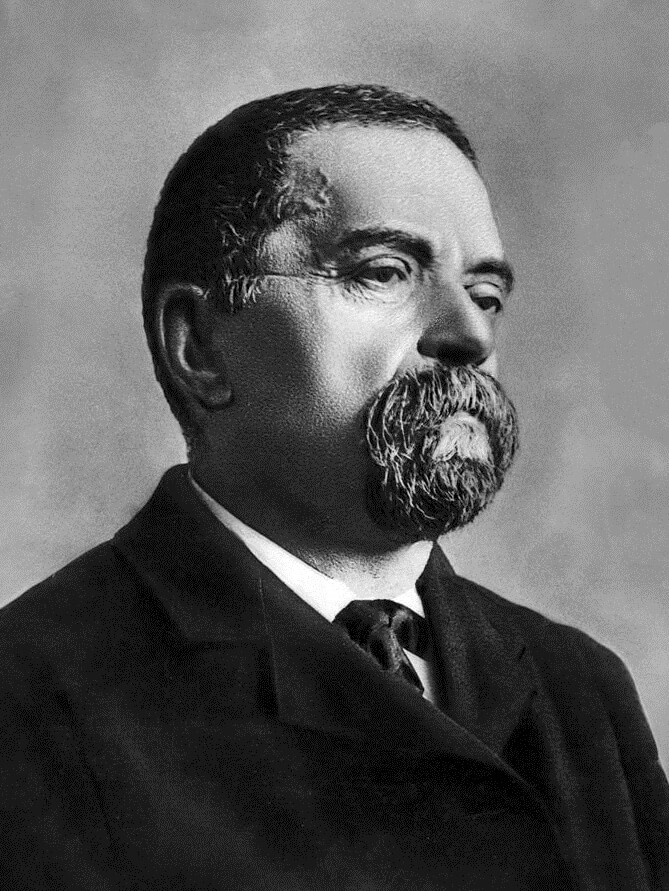
He was an Italian astronomer who is remembered for his observations of Mars over seven oppositions and named the “seas” and “continents”. He made studies, both theoretical and observational, of comets, determining from the shape of their tails that there was a repulsive force from the Sun. He also explained the regular meteor showers as the result of the dissolution of comets and proved it for the Perseids. He discovered the asteroid Hesperia in 1861.
Vilhelm Bjerknes (14 Mar 1862 - 9 Apr 1951)
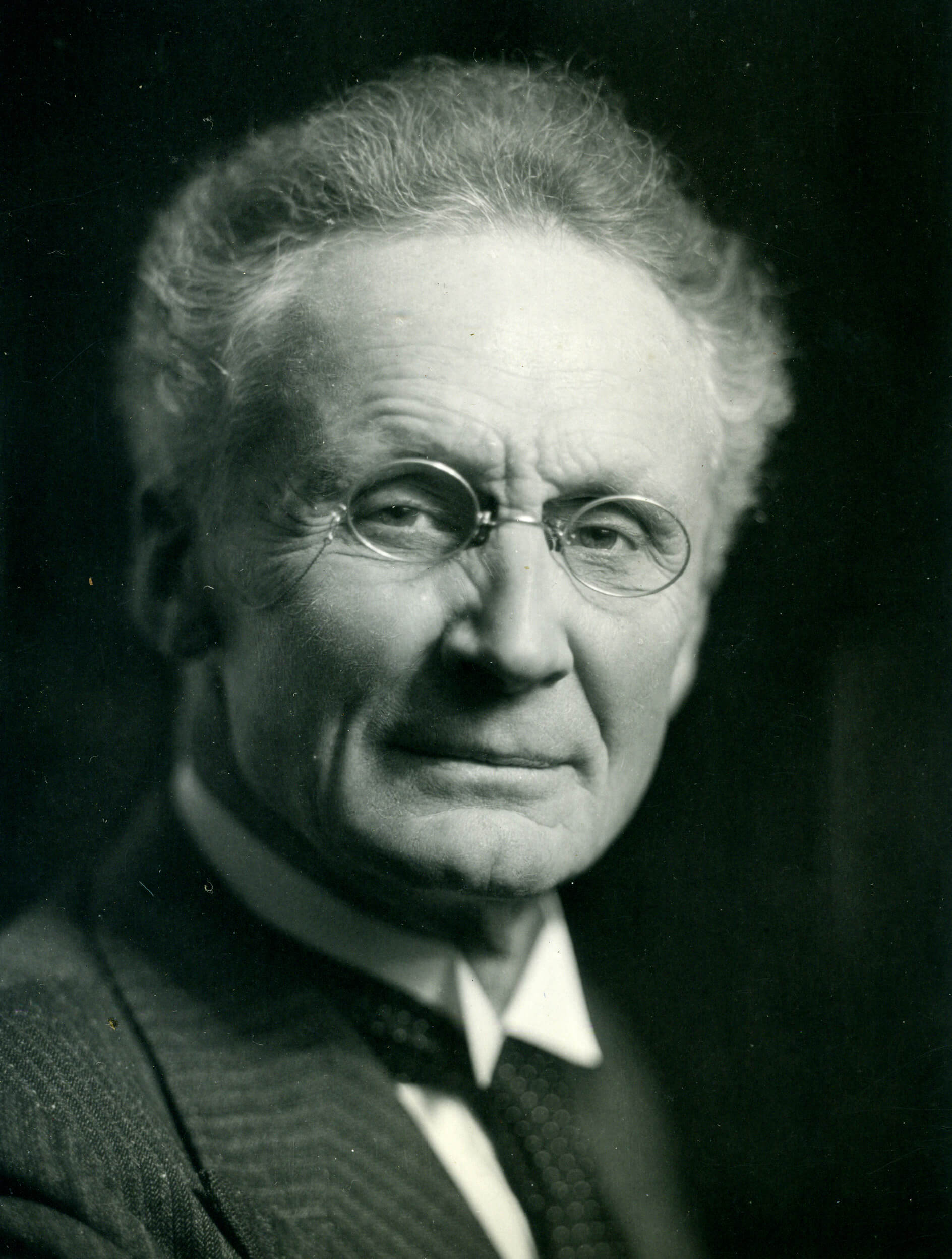
He was a Norwegian physicist and meteorologist and one of the founders of the modern science of weather forecasting. He assisted his father in carrying out experiments when he was young to verify the theoretical predictions that resulted from his father’s hydrodynamic research. His work in meteorology and on electric waves was important in the early development of wireless telegraphy.
March 14 in Physics History - Deaths – Physicists died on March 14
Stephen Hawking (8 Jan 1942 - 14 Mar 2018)

He was an English theoretical physicist who was one of the greatest leaders in his field. His areas of research were theoretical cosmology and quantum gravity. He was a Lucasian Professor of Mathematics at Cambridge University. He was confined to a wheelchair and was unable to speak due to Lou Gehrig’s disease. Despite his challenges, he utilized his intelligence, abilities, and knowledge to make remarkable contributions to the field of cosmology. He was the author of the book A Brief History of Time.
Howard Hathaway Aiken (9 Mar 1900 - 14 Mar 1973)
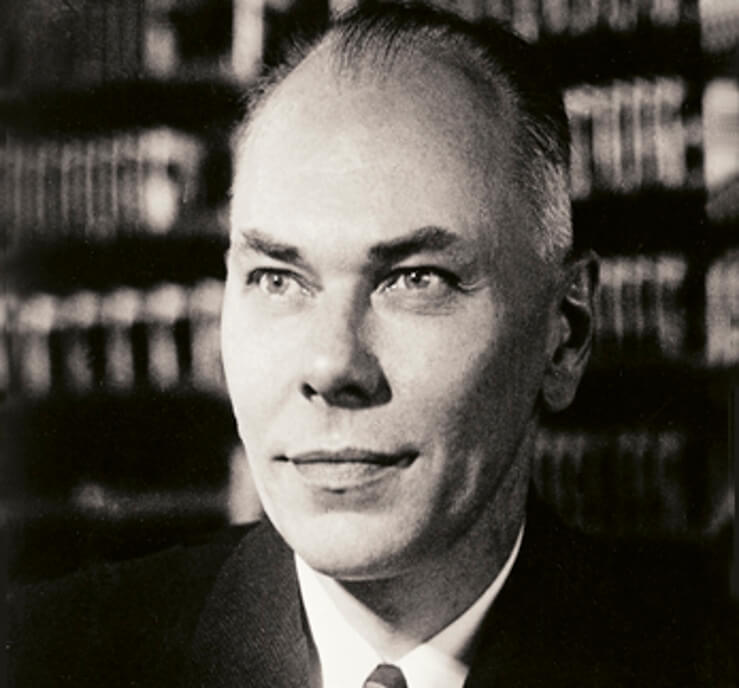
He was an American mathematician who invented the Harvard Mark I, a forerunner of the modern electronic digital computer. His research had led to a system of differential equations that could only be solved using numerical techniques. His idea was to use an adaptation of Hollerith’s punched-card machine. When built, it was controlled by a sequence of instructions on punched paper tapes and used punched cards to enter data and give output from the machine.
William Fowler (9 Aug 1911 - 14 Mar 1995)

He was an American astrophysicist who shared the Noble Prize in physics for his theoretical and experimental studies of the nuclear reactions of importance in the formation of the chemical elements in the universe. He spent his life calculating the rates of nuclear reactions of astrophysical interest, as in the interior of stars. he made theoretical calculations relating to supernovae neutrinos, the formation of light elements, and nucleocosmochronology.
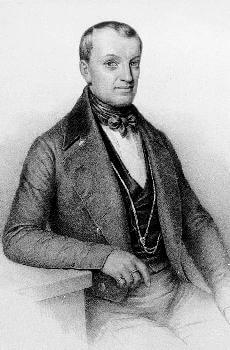
Johann Heinrich von Mädler (29 May 1794 - 14 Mar 1874)
March 14 in Physics History - Events – Physics Events on March 14
Pi Day
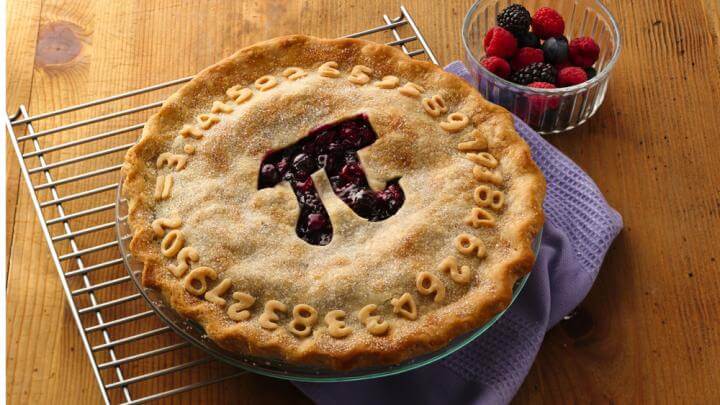
Pi Day is an annual celebration of the mathematical constant π (pi). Pi Day is observed on March 14 (3/14 in the month/day format) since 3, 1, and 4 are the first three significant digits of π. What is π, anyway? Divide any circle’s circumference by its diameter; the answer (whether for a pie plate or a planet) is always approximately 3.14, a number we represent with the Greek letter π. Keep calculating π’s digits with more and more accuracy – as mathematicians have been doing for 4,000 years—and you’ll discover they go on literally forever, with no pattern.