March 16 in Physics History
Physics history will help you to develop a better understanding of the physics world!
birthdays & deaths
Explore all birthdays & deaths of physicists occurred on this day with their short biography!
physics Events
Know all important discoveries made by physicists & events happened on this day with complete information!
March 16 in Physics History - Births - Physicists born on March 16
Vladimir Mikhaylovich Komarov (16 Mar 1927 - 24 Apr 1967)

He was a Soviet cosmonaut and the first man known to have died during a space mission. He was commander Pilot of Voskhod I, on a day-long mission, in 1964. Also, there was dr. Yegorov, a medical doctor as flight physiologist and the spacecraft engineer Konstantin Feoktistov. During landing, the spacecraft’s parachutes opened at an altitude of 7 km followed by a soft landing system that used streams of gases from nozzles to reduce touchdown velocity to near zero. He died during his second mission when his spacecraft became entangled in its main parachute and fell several miles to Earth.
Frederick Reines (16 Mar 1918 - 26 Aug 1998)
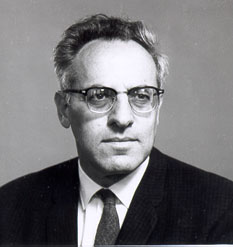
He was an American physicist who was awarded the Noble Prize in 1995 for physics for his detection of neutrinos. It is a subatomic particle, a tiny lepton with little or no mass and a neutral charge which had been postulated by Wolfgang Pauli in the early 1930s.
R. Walter Cunningham (Born on 16 Mar 1932)

He is an American astronaut and civilian participant in the Apollo 7 mission. He occupied the lunar module pilot seat for the eleven-day flight of Apollo 7 on 11 Oct 1968. He also participated in maneuvers enabling the crew to perform exercises in transposition and docking and lunar orbit rendezvous with the S-IVB stage of their Saturn IB launch vehicle; in test ignitions of the service module propulsion engine; and provided the first effective television transmit of onboard crew activities.
Caroline Lucretia Herschel (16 Mar 1750 - 9 Jan 1848)

She was a German-born British astronomer who assisted his brother, Sir William Herschel in his astronomical researches making calculations associated with studies. In her telescope observations, she found three nebulae and eight comets. She also published the index to Flamsteed’s observations of the fixed Stars and a list of his mistakes in 1797.
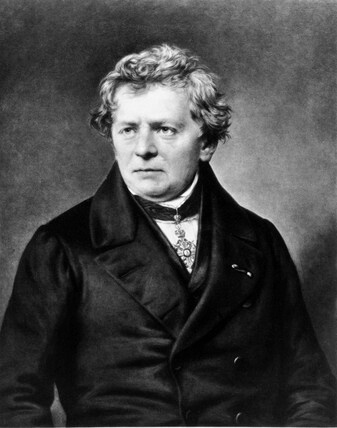
Georg Simon Ohm (16 Mar 1789 - 6 Jul 1854)
Heinrich Kayser (16 Mar 1853 - 14 Oct 1940)

Alexander Stepanovich Popov (16 Mar 1859 - 13 Jan 1906)
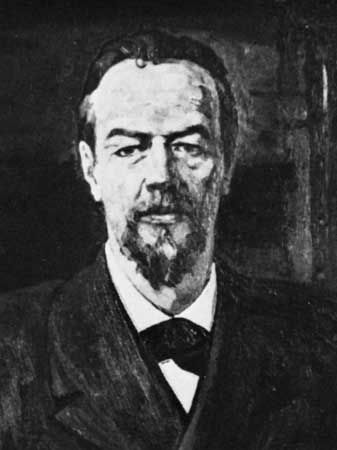
He was a Russian physicist who was the first person to invent a radio receiving device. His work as a teacher at a Russian nav school led him to explore high-frequency electrical phenomena. He presented a paper on a wireless lightning detector on May 7, 1895. This day is celebrated in the Russian Federation as Radio Day.
March 16 in Physics History - Deaths - Physicists died on March 16
Félix Savart (30 Jun 1791 - 16 Mar 1841)
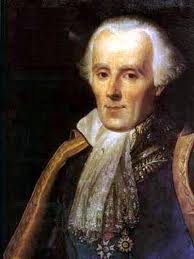
He was a French physicist who researched various manifestations of vibration. He developed the Biot-Savart Law with Jean-Baptiste Biot in 1820. After earning a degree in medicine, he took an interest in physics, beginning with a study of the violin to explain the contributions from its components to the sound from the strings. He also investigated voice and hearing. To measure high-frequency hearing limits, he devised a rotating toothed wheel to produce a sound of any frequency by a reed held against it.
Yves-André Rocard (22 May 1903 - 16 Mar 1992)

He was a French physicist and mathematician who contributed to the development of the French atomic bomb and the understanding of such diverse fields of research as semiconductors, seismology, and radio astronomy. He learned about radars and interference from the Sun. During WW II, as Head of the Research Department of the free French naval forces in England.
March 16 in Physics History - Events - Physics Events on March 16
The First US Spacecraft Docking

The first US manned docking of two spacecraft was accomplished by Gemini VIII in 1966. Though this was accomplished, some problems developed that required the mission and its other planned objectives and experiments to be terminated early.
Goddard Space Flight Center Formed
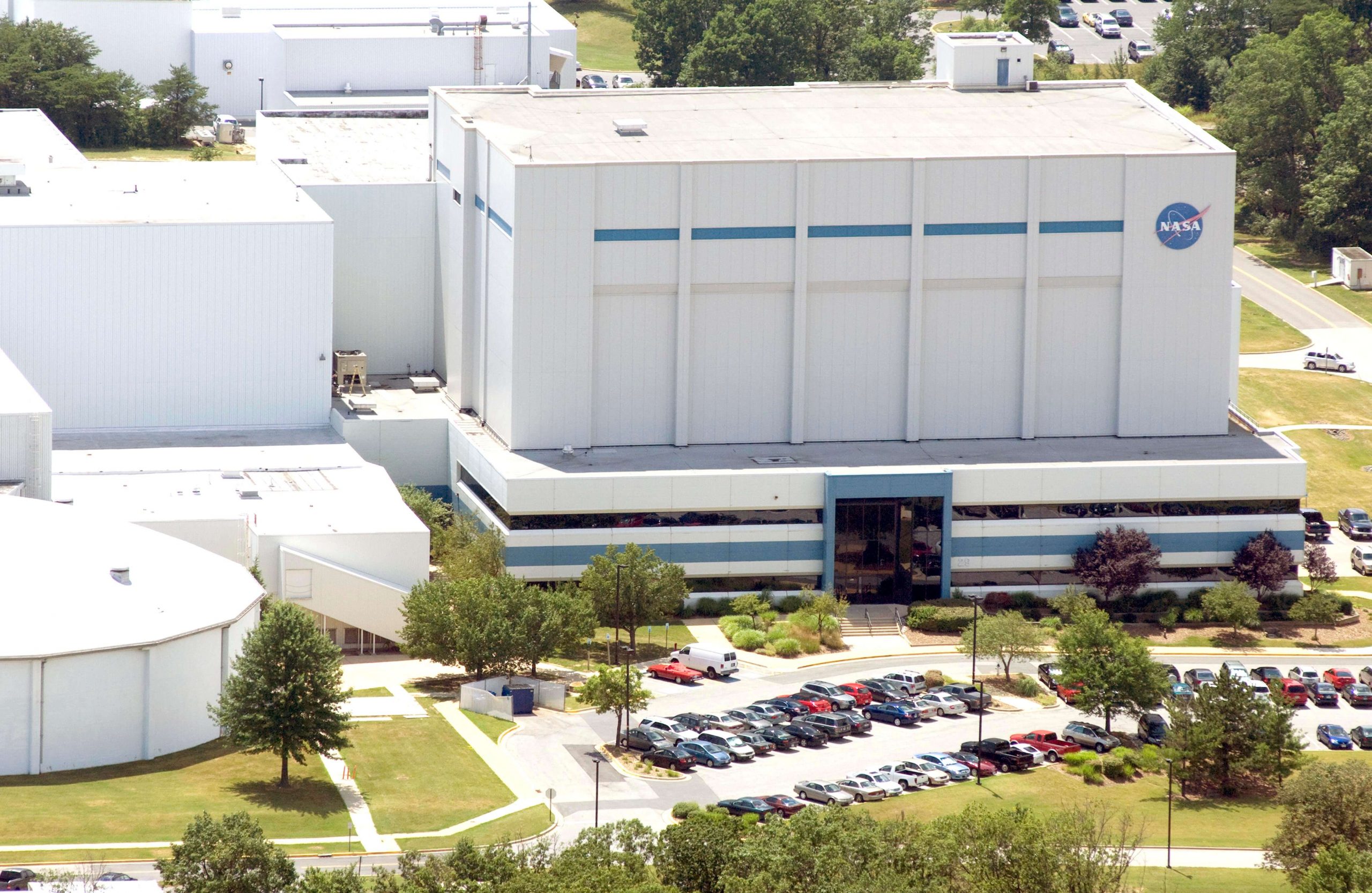
The Goddard Space Flight Center was formally dedicated in 1961. This was NASA’s first research center and named after Robert Goddard, the rocketry pioneer. The center’s mission was to “develop and fabricate satellites and sounding rocket instrumentation to probe space in the immediate vicinity of the earth”. Goddard had first successfully launched his small test liquid-fuel rocket on the same day in 1926.
The First US Liquid Fuel Rocket

The first US liquid fuel rocket flight was launched by Robert Goddard in a field in Auburn, Mass in 1926. The rocket took off to a height of 41-ft, leveled off, and within 2.5 seconds hit the ground 184 feet away. The camera runs out of the film, so no photographic record remains.