March 21 in Physics History
Physics history will help you to develop a better understanding of the physics world!
birthdays & deaths
Explore all birthdays & deaths of physicists occurred on this day with their short biography!
physics Events
Know all important discoveries made by physicists & events happened on this day with complete information!
March 21 in Physics History - Births – Physicists born on March 21
Baron Jean-Baptiste-Joseph Fourier (21 Mar 1768 - 16 May 1830)

He was a French mathematician and administrator who is famous for his influence on mathematical physics through his “The Analytical Theory of Heat”. He introduced the Fourier Series to aid in solving conduction equations. This series allows the function of any variable to be expanded to a series of sines of its multiples.
Guillermo Haro (21 Mar 1913 - 26 Apr 1988)

He was a Mexican astronomer who was elected as the first foreign associate of the Royal Astronomical Society from a developing country. At first, he was working as a newspaper reporter. He was positioned as a staff at the Tonantzintla Observatory after he interviewed Luis Erro. With George Herbig, he discovered the Herbig-Haro objects that seemed to be much younger stars than the rest of the stars.
Halton Christian Arp (21 Mar 1927 - 28 Dec 2013)

He was an American astronomer who is known for challenging the theory that redshifts of quasars indicate their great distance. He challenged that the redshift is a uniform indicator of distance. Many astronomers debated his assertion that quasars are related to peculiar galaxies since the late 1960s. Most astronomers believe that quasars are unrelated to the peculiar galaxies but no one has ever been able to explain why the quasars are concentrated around the peculiar galaxies.
March 21 in Physics History - Deaths – Physicists died on March 21
Nicolas Louis de Lacaille (15 Mar 1713 - 21 Mar 1762)
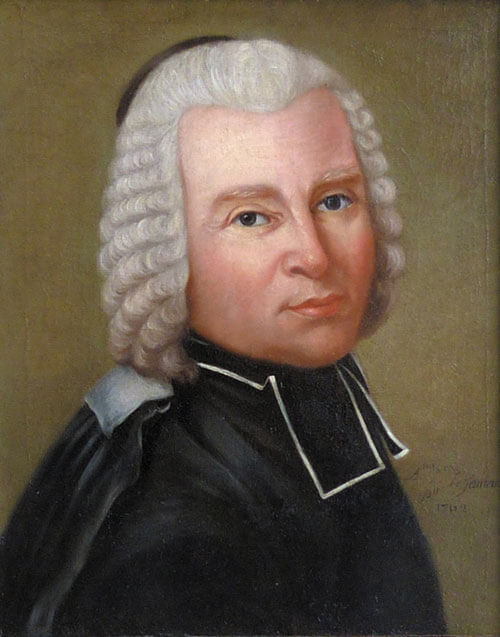
He was a French astronomer who names 15 of the 88 constellations in the sky. He spent 4 years mapping the constellation visible from the southern hemisphere. He was said to have observed over 10,000 stars using just his 1/2 inch refractor. He also established the first southern star catalog containing 9776 stars.
Edward Walter Maunder (12 Apr 1851 - 21 Mar 1928)

He was an English astronomer who first started the British Civil Services Commission examination for the post of photographic and spectroscopic assistant at the Royal Observatory, Greenwich. He worked at the observatory for the next forty years measuring the sunspots and checking historic records. He found a lack of reports on sunspots from 1645 to 1715. Instead of questioning this, he started researching and found that there are indeed decades-long times when the sun has very few sunspots. Now we call these periods as Maunder minima.
March 21 in Physics History - Events – Physics Events on March 21
Saturn's Moon Discovery
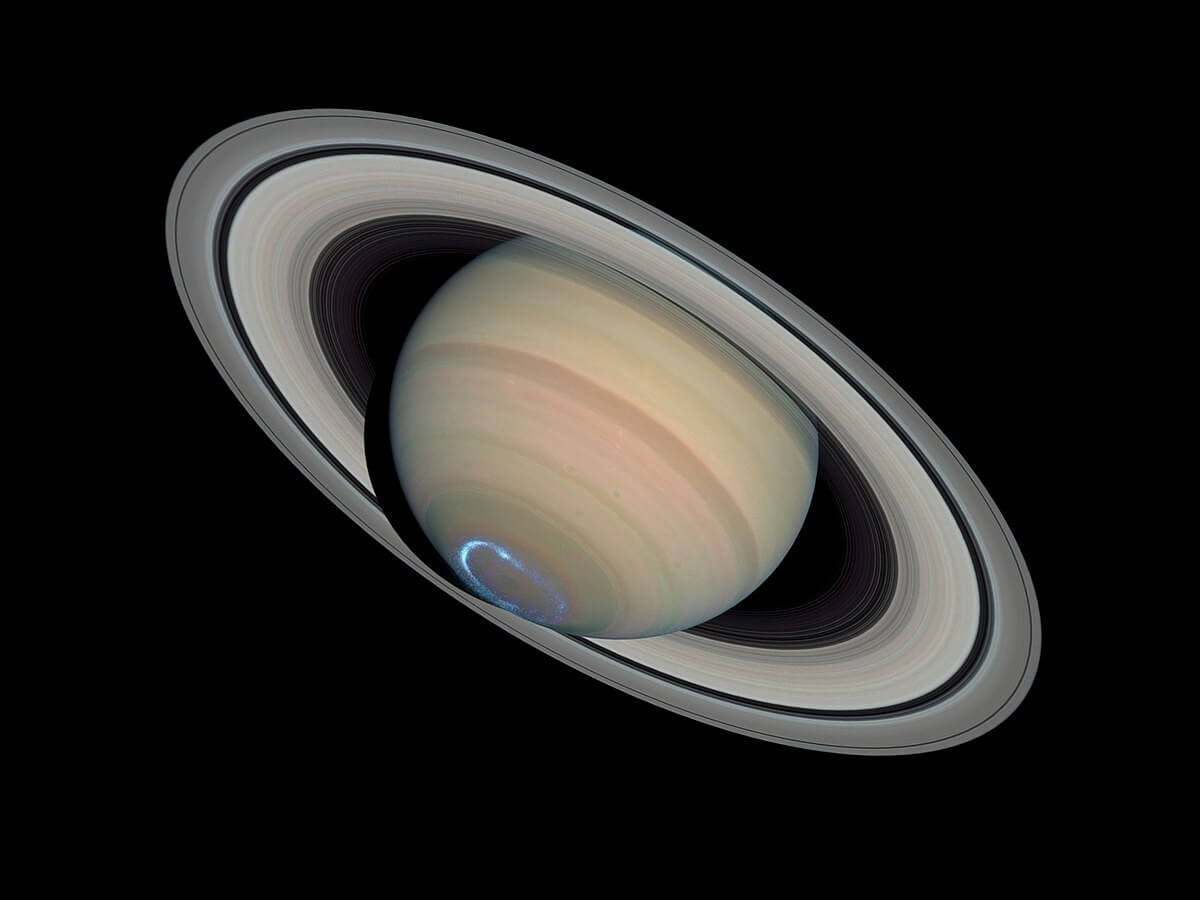
On this day, two moons of Saturn: Tethys and Dione were discovered by Giovanni Domenico Cassini in 1684. He used a refractor telescope with an aperture of 108mm. He also discovered other moons of Saturn including Titan in 1655, Iapetus, and Rhea.
Exclusion principle Published
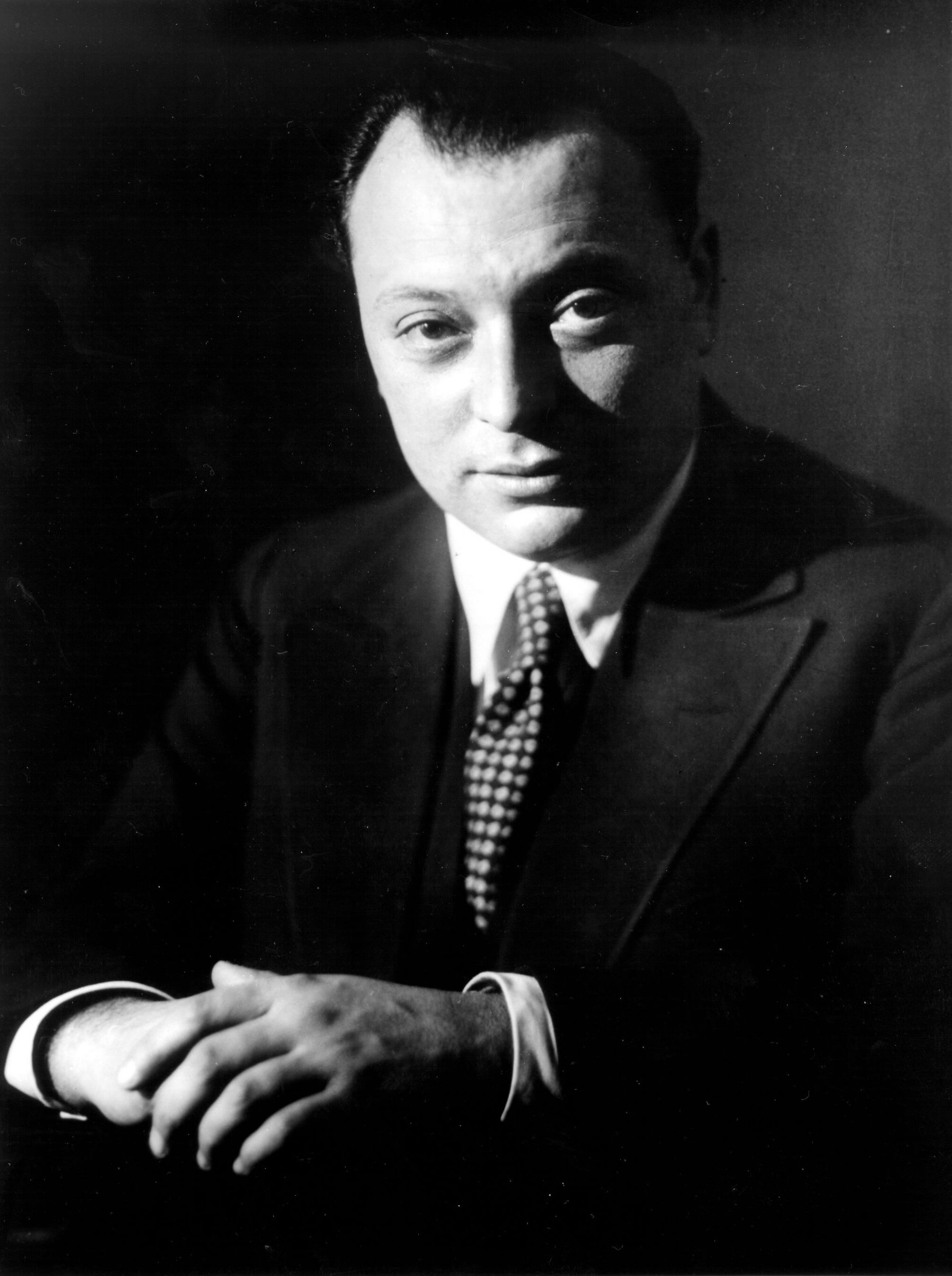
On his day, Wolfgang Pauli published his Exclusion Principle in 1925 when he was 24 years old. He stated that two nearby electrons cannot be in the exactly same state at the same time. He was awarded the Nobel Prize for his principle in 1945.
Plutonium Named

On this day, a secret report was submitted in 1942 suggesting the name “plutonium” for artificial element 94 because it followed neptunium 93 and uranium 92. The paper was kept a secret until it was published by the Journal of the American Society after WW II. It was submitted by Glenn Seaborg and Arthur C. Walh.