Skip to content Skip to footer

March 6 in physics history

Physics history will help you to develop a better understanding of the physics world!

birthdays & deaths

Explore all birthdays & deaths of physicists occurred on this day with their short biography!

physics Events

Know all important discoveries made by physicists & events happened on this day with complete information!

March 6 in Physics History - Births – Physicists born on March 6

Valentina Tereshkova (06 Mar 1937)
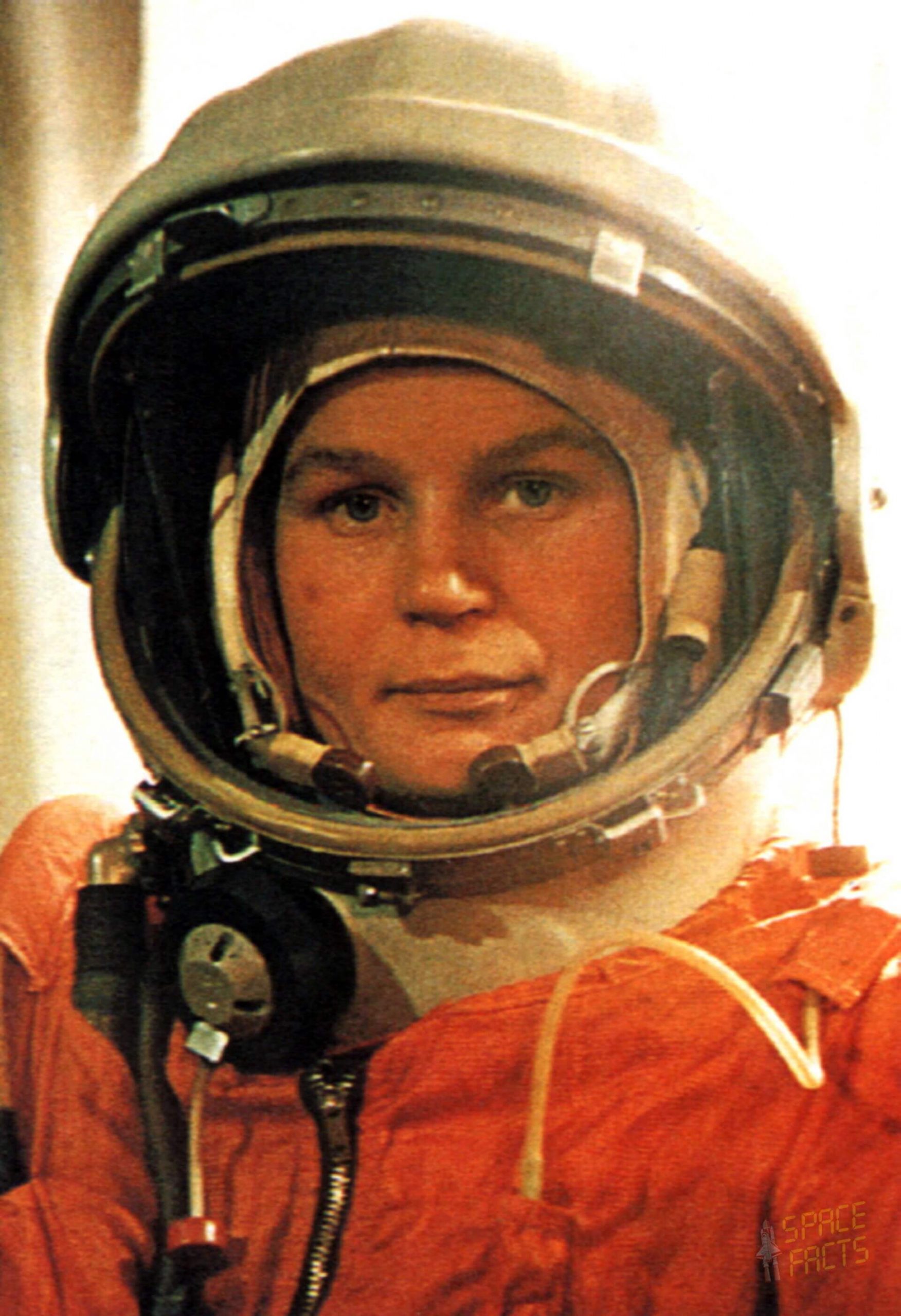
She was a Soviet cosmonaut who was the first woman to fly in space. She is the only solo woman. She was selected as a cosmonaut for her expert skill in parachuting. She was the only one of the four-woman participants to complete a space mission. On 16 Jun 1963, she was launched in Vostok 6 and made 48 orbits of Earth in 71 hours. Tereshkova left the program shortly after her return. She was also honored with the title Hero of the Soviet Union.

Joseph von Fraunhofer (6 Mar 1787 - 7 Jun 1826)

He was a German physicist who first studied the dark lines in the solar spectrum, which were seen by Wollaston in 1802. He measured 576 lines but could not explain them. These are caused by the selective absorption of those wavelengths by atoms of elements. He used a diffraction grating instead of a prism to disperse the spectrum. He also invented a heliometer.

Johann Georg Hagen (6 Mar 1847 - 5 Sep 1930)

He was an Austrian Jesuit priest and astronomer who made a catalog of variable stars. He worked at the Vatican Observatory and reexamined for accuracy the listing of all the NGC (New General Catalogue of Nebulae and Star Clusters) objects north of about -30 degrees. He published lists of errata in the NGC. During his observations, he observed tenuous dark clusters of interstellar matter. These strange clouds have not been recorded by others. Jesuits have been involved in astronomy since 1551.

March 6 in Physics History - Deaths – Physicists died on March 6

Hans Albrecht Bethe (2 Jul 1906 - 6 Mar 2005)

He was a German-American physicist who helped to shape classical physics into quantum physics. He also increased the understanding of the atomic processes responsible for the properties of matter and of the forces governing the structures of atomic nuclei. He studies nuclear reactions and reaction cross-sections. In 1943, he was asked to be the head of the Theoretical Division at Los Alamos on the Manhattan Project. He also received the Noble prize for physics (1967) for his work on the production of energy in stars.

March 6 in Physics History - Events – Physics Events on March 6

Niels Bohr's Model of the Atom

On this day in 1913, Niel Bohr described his new ideas on the atomic structure in his first paper. It was one of the three historic papers he wrote on this subject.

Dawn spacecraft in Ceres orbit

In 2015, the NASA spacecraft, Dawn, entered orbit around the dwarf planet, Ceres. It became the first spacecraft to orbit a dwarf planet. It travelled for 7.5 years covering 3100 million miles. On its way, it explored the giant asteroids and returned many images. As Dawn neared Ceres, it’s cratered surface showed some unusual small bright spots.

April 12 in Physics History

Physics history will help you to develop a better understanding of the physics world!

birthdays & deaths

Explore all birthdays & deaths of physicists occurred on this day with their short biography!

physics Events

Know all important discoveries made by physicists & events happened on this day with complete information!

April 12 in Physics History - Births – Physicists born on April 12

Edward Walter Maunder (12 Apr 1851 - 21 Mar 1928)

He was an English astronomer who first started the British Civil Services Commission examination for the post of photographic and spectroscopic assistant at the Royal Observatory, Greenwich. He worked at the observatory for the next forty years measuring the sunspots and checking historic records. He found a lack of reports on sunspots from 1645 to 1715. Instead of questioning this, he started researching and found that there are indeed decades-long times when the sun has very few sunspots. Now we call these periods as Maunder minima.

Ferdinand von Lindemann (12 Apr 1852 - 6 Mar 1939)

He was a German mathematician who proved that π is not a solution to any algebraic equation with a rational coefficient. This explained the insoluble natural or classical Greek mathematical problem of constructing a square with the same area as a given circle using a ruler and compasses alone. He discussed Hermite’s methods that he used to prove that ‘e’ is transcendental. He extended Hermite’s results in 1882 to show that π was also transcendental.

April 12 in Physics History - Deaths – Physicists died on April 12

Charles Messier (26 Jun 1730 - 12 Apr 1817)

He was a French astronomer who first compiled a systematic catalog of “M objects” and discovered 15 comets. His catalog contained nebulae, 103-star clusters, and galaxies. He concluded the alphanumeric names for objects like M1, M2, etc.

Geoffrey F. Chew (5 Jun 1924 - 12 Apr 2019)

He was an American physicist who led the group of S-matrix theorists researching the strong interaction and the bootstrap principle. He was a graduate student of Enrico Fermi. His group calculated the interactions of bound-states without assuming that there is a point-particle field theory underneath.

Igor Tamm (8 Jul 1895 - 12 Apr 1971)

He was a Soviet physicist who shared the Noble Prize with Pavel A  Cherenkov, and Ilya M. Frank for physics for his works in explaining Cherenkov radiation. He developed the theoretical interpretation of the Cherenkov effect which states that the radiation of electrons moves faster than the speed of light through matter. He also developed a method for studying the interaction of nuclear particles and contributed towards the methods for the control of thermonuclear reactions.

April 12 in Physics History - Events – Physics Events of April 12

First Man To Orbit The Earth

On this day, Yuri Gagarin became the first man to orbit the Earth in 1961. The control of the spacecraft was locked to prevent him from taking control of the ship. It had a radio, television, and life-supporting equipment. He ejected and made a planned descent landing with his parachute but the Soviet Union denied this to save its reputation. After 7 years, he died in a plane crash.

The First Yo-Yo Toy In Space

The first yo-yo toy was taken into space in the Space Shuttle Discovery mission 51-D in 1985. With this yellow plastic Duncan Imperial yo-yo, other toys were exhibited during a time in orbit. Astronauts did the tricks with toys but the yo-yo sleeper trick couldn’t work without normal gravity. While spinning, the gyroscope showed exceptional stability. The flywheel slowed without normal gravity.

Space Shuttle Columbia Was Launched

Columbia, the American Space Shuttle was launched into space in 1981. John W. Young was the mission commander.