May 27 In Physics History
Physics history will help you to develop a better understanding of the physics world!
birthdays & deaths
Explore all birthdays & deaths of physicists occurred on this day with their short biography!
physics Events
Know all important discoveries made by physicists & events happened on this day with complete information!
May 27 In Physics History - Births – Physicists born on May 27
William Webster Hansen (27 May 1909 - 23 May 1949)
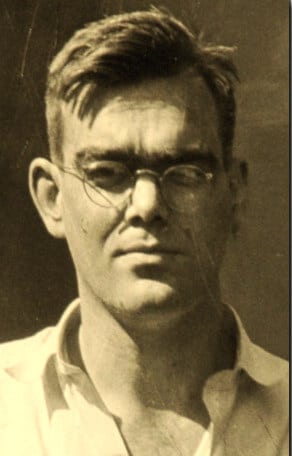
He was an American physicist who is regarded as the founder of microwave technology. He also contributed to the development of radar and developed a vacuum tube klystron, essential to radar technology. It permits the generation of powerful and stable high-frequency oscillations by the use of amplitude modulation of an electron beam. It is also used in satellite communications, airplane and missile guidance systems, and telephone. He also demonstrated the first 4.5 MeV linear accelerator after WW II.
Lawrence M. Krauss (Born On 27 May 1954)

He is an American theoretical physicist, cosmologist, and author who has written several science books including Fear of Physics (1993) and Quantum Man: Richard Feynman’s Life in Science (2011). He proposed the theory of dark energy that makes up most of the mass and energy in the Universe. He also became the inaugural director of the Origins Project at Arizona State University in August 2008. The primary mission of this is to explore fundamental questions and expand the public understanding of science issues.
John Cockcroft (27 May 1897 - 18 Sep 1967)
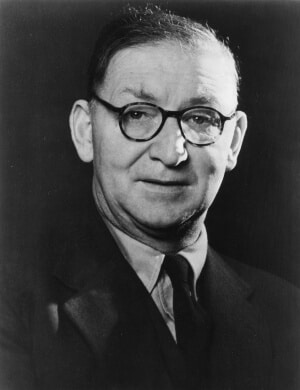
He was a British physicist who started the use of particle accelerator to study the atomic nucleus and earned a share of the Nobel Prize for Physics in 1951. Together with Ernest T.S. Walton, he built an accelerator, the Cockcroft-Walton generator, that could generate a large number of particles at lower energies. It was the first atom-smasher used to disintegrate lithium atoms by bombarding them with protons. It was the first time that an atom was split bg someone. They established the importance of accelerators for nuclear research and eventually it became the most useful in the laboratories of the World.
Kasimir Fajans (27 May 1887 - 18 May 1975)

He was a Polish-American physical chemist who discovered the law of radioactive displacement at the same time as Frederick Soddy of Great Britain. This law states that when a radioactive atom decays by emitting an alpha particle, the atomic number of the resulting atom is two less than the parent atom. He first discovered the protactinium with O. Göhring in 1913. He discovered many other elements that are created through nuclear disintegration.
May 27 In Physics History - Deaths – Physicists died on May 27
Roy K. Marshall (21 Aug 1907 - 27 May 1972)

He was an American astronomer who was the first director of Morehead Planetarium, Chapel Hill, N.C. He contributed to a book called Star Maps For beginners by I.M. Levitt that was based on learning the constellations which first appeared in 1942. He became a TV science broadcaster with a weekly Nature of Things 15-minute program that became so popular it ran for years.
Ernst Ruska (25 Dec 1906 - 27 May 1988)
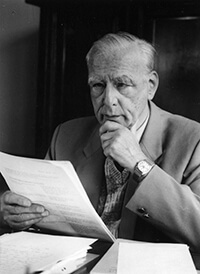
He was a German electrical engineer who invented the electron microscope and was awarded a share of the Nobel Prize for the same. He discovered in 1928, that a magnetic coil could act as a lens to focus an electron beam. The first primitive electron microscope was produced by adding a second lens by him. He continued to improve it until the magnification increased to x7000. The electron microscope has been in use since then in many areas of science.
Joseph Wilson Swan (31 Oct 1828 -27 May 1914)
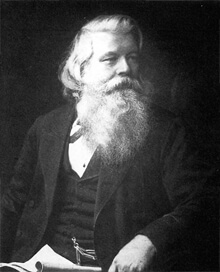
He was an English scientist, physicist, and inventor who produced an early electric incandescent lamp. It provided low light output, was short-lived, and was operated from battery cells. He raised the problem of photographic print fading that led to experiments with a solution using carbon, perfecting and patenting the process in 1864. Later, he invented the dry photographic plate that improved photography to a great extent.
Giambattista Beccaria (3 Oct 1716 -27 May 1781)

He was an Italian physicist who got inspired by Benjamin Franklin’s discoveries and extended them with his own research. He demonstrated meteorological and geophysical phenomena in terms of “natural electricity”. He studied the relative powers of parallel plate condensers and also designed an electrical thermometer. His work is published in five books.
May 27 In Physics History - Events – Physics Events of May 27
Edison's Storage Battery Company Was Formed

The Edison Storage Battery Company was organized in 1901. Edison wanted a practical battery to power electrical automobiles. He also aimed to improve the widely use dead cell batteries. He spent two years testing and developing his battery but due to certain defects, his production was ceased for the next five years. Five years later, it still became a huge operation and Hua innovations produced many uses in railroad signals.
The Highest Recorded Temperature in 1994

The highest temperature in a lab was recorded to be 510 million degrees Celsius in the Tokamak Fusion Test Reactor in 1994 (Now it is not the highest recorded temperature). Earlier in 1985, the highest temperature achieved was 100 million degrees Celsius. The TFTR was the first such device in the world to study the confinement and heating of plasmas with a 50/50 mixture of deuterium and tritium.